

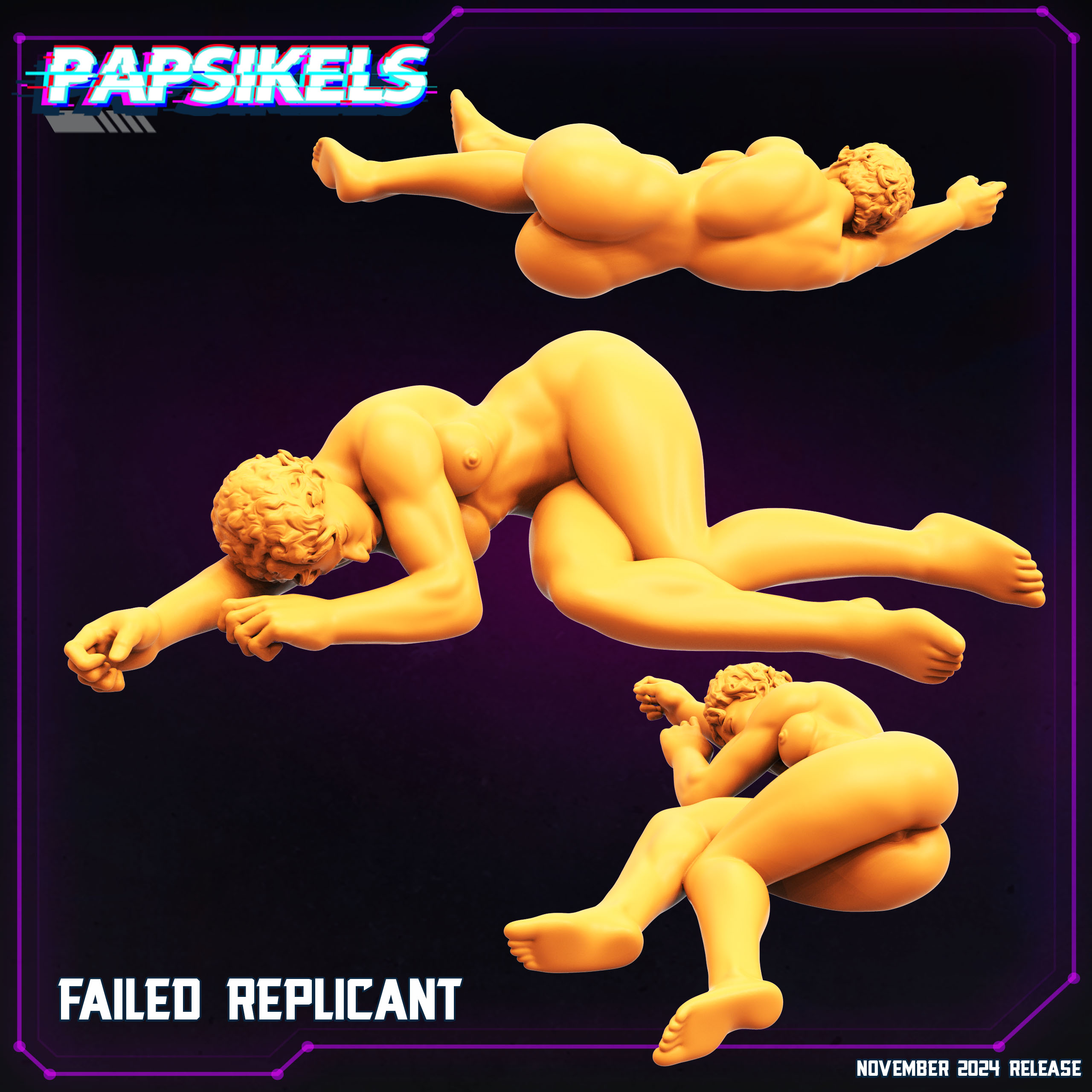
Failed Replicant

Base not included. Compatible with 28-32mm scale games.
This miniature is printed in high quality resin perfect for painting. Its resistance and high definition make it ideal for miniatures and role-playing games. All our figures are printed with a resolution of 0,04mm 12k printers and have been smoothly washed and cured after printing. Additionally, all supports have been removed, although they may require some additional cleaning before painting, as well as assembly and gluing of certain parts.
This product contains small parts that may cause choking and is not suitable for children under fourteen years of age.
3,50 € 4,95 €
-
Cyberpunk, SciFi
Failed Replicant
Base not included. Compatible with 28-32mm scale games.
This miniature is printed in high quality resin perfect for painting. Its resistance and high definition make it ideal for miniatures and role-playing games. All our figures are printed with a resolution of 0,04mm 12k printers and have been smoothly washed and cured after printing. Additionally, all supports have been removed, although they may require some additional cleaning before painting, as well as assembly and gluing of certain parts.
This product contains small parts that may cause choking and is not suitable for children under fourteen years of age.
SKU: PAP000400 -
Spray Primers
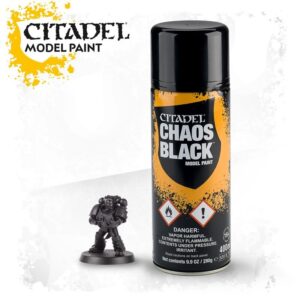
Chaos Black Spray Paint
CHAOS BLACK PRIMER SPRAY PRODUCT DESCRIPTION
Chaos Black Spray is designed for basecoating plastic, resin and metal miniatures. Reformulated for maximum results, with a fantastic black colour.- Can be used as basecoat or undercoat
- 400ml spray can
- Comes with instruction for safe use
SKU: GW62-02 -
Title: The Tale of the Failed Replicant – A Resin Army’s Lost Creation
As a dedicated member of the Resin Armies community, I’ve seen my fair share of intricate models, detailed sculpts, and amazing miniatures come to life on my shelves. From meticulously painted armies to stunning dioramas, the world of resin miniatures is one filled with creativity, passion, and artistry. However, there are moments when even the best intentions, the most advanced technology, and the most skilled craftsmanship can lead to something unexpected. This is the story of a failed replicant, a creation that never quite lived up to the promise of its design. A story that, despite its flaws, still carries a certain intrigue—a story that, in the world of resin miniatures, reminds us of the beauty in imperfection.
The Birth of the Replicant
It all began like most other projects—a team of miniature designers came together to create something extraordinary. The idea was ambitious: a replicant, an artificial being, part human and part machine. This was no ordinary resin figure; this would be a model that was designed to challenge the boundaries of 3D printing technology. The goal was to create a figure that not only captured the futuristic, cyberpunk aesthetic but also conveyed the deep, philosophical themes of what it means to be human. They poured over concept art, tweaking every detail, refining every curve, and optimizing every element of the model for perfect execution.
The replicant, as it was envisioned, was supposed to be a fully articulated miniature, with enough detail to rival the finest of 3D printed works. Its armor, sleek and modern, was designed to have fine textures that would catch the light just right when painted. Its face, half-human and half-machine, was meant to have an enigmatic, almost unsettling expression, an embodiment of artificial intelligence gone awry. It was a model that represented both the beauty and the tragedy of a being that was neither fully human nor fully machine—a concept that resonated deeply within the realm of science fiction.
But somewhere along the way, things went wrong.
The Failed Creation
As any resin armies community member can tell you, even the most advanced 3D printing technology is not infallible. What was supposed to be a flawless replication of the design quickly became an exercise in frustration. The first few prints were riddled with issues. The intricate parts of the model, such as the delicate joints and thin armor plating, would fail to form properly. Small imperfections would creep in, leaving tiny holes or warped surfaces that could not be corrected without starting over.
It didn’t help that the resin itself posed its own set of challenges. Unlike plastic or metal miniatures, resin requires a certain level of expertise to handle. The material can be fickle—too much heat, too little exposure to light, or a misstep in the curing process, and suddenly, your creation is a warped version of its intended form. In the case of the replicant, it was as if the resin itself had rejected the design, leaving behind a shadow of what was supposed to be.
Despite multiple attempts to correct the flaws, the team’s vision continued to deteriorate. The model was over-optimized for printing, and as a result, it became a nightmare to assemble. Parts that were once supposed to be seamlessly connected had become unfit for attachment. It was almost as if the machine that produced it was trying to perfect something that couldn’t be perfected—a machine struggling with its own identity.
When I first laid eyes on the failed replicant, I couldn’t help but feel a sense of awe. There, on my workbench, stood the remnants of what could have been a masterpiece. The model was far from perfect, yet its imperfections gave it a character that no flawless resin miniature could ever possess. Its armor was chipped, its limbs misshapen, and its face—well, it was nothing like what the original design had promised. But there was something about it that struck a chord with me. The half-human, half-machine figure, now flawed beyond recognition, seemed almost more human in its struggle.
A Community’s Response
I knew that the failed replicant wasn’t the first, nor would it be the last, example of a design gone wrong. In our Resin Armies community, we’ve seen our fair share of disasters. Every sculptor, every miniature designer, has encountered a project that didn’t live up to expectations. But there’s something unique about how we respond to these failures. Rather than casting aside flawed designs, we often see them as opportunities for improvement, learning, and innovation.
When I shared pictures of the failed replicant with my fellow Resin Armies enthusiasts, the responses were mixed. Some saw it as a lost cause, an unfortunate attempt that should never have been released. Others, however, found the figure captivating. “It’s almost as if the replicant itself is trying to escape its own creation,” one member wrote. “The imperfections give it a sense of life, a sense of struggle that you don’t get with pristine, perfect models.”
This was the beauty of the failed replicant—it wasn’t just a flawed miniature. It was a piece of art that told a story, a story that wasn’t quite finished, but one that was still worth telling. In our community, there’s always room for failure, for imperfection. After all, isn’t that what makes our hobby so rewarding? We take something broken, something incomplete, and with a little paint, some love, and a lot of creativity, we transform it into something uniquely our own.
The Lessons Learned
As with any failed project, the most valuable lessons come not from the successes, but from the mistakes. The failed replicant taught me a great deal about the limitations of 3D printing and the intricacies of resin modeling. It reminded me that no matter how advanced our technology becomes, there will always be challenges that we can’t foresee. Whether it’s the complexity of a miniature’s design or the quirks of the material, there’s always something that can go wrong.
But perhaps most importantly, the failed replicant reinforced the notion that failure is part of the creative process. In a world where perfection is often idolized, there’s something refreshing about embracing the flaws in a design. It’s the imperfections that give a model character, that give it life. The failed replicant may never have become the iconic figure that it was intended to be, but it will always remain a symbol of the journey, the struggle, and the innovation that goes into creating something truly special.
And let’s not forget about the possibility of redemption. After all, even the most failed creations can be rebuilt, remastered, or re-imagined. A few tweaks here, a few adjustments there, and what was once a disaster can become something worth celebrating. The replicant, though imperfect, might just find a new lease on life in the hands of a skilled artisan. Perhaps someone in the community will take the failed model, rework the design, and turn it into something that surpasses the original vision. That’s the beauty of our hobby—it’s always evolving, always changing, and always filled with possibilities.
The Legacy of the Failed Replicant
For those of us who have seen it, the failed replicant will always hold a place in our hearts. It is a testament to the ambition and creativity of those who dared to push the boundaries of resin modeling. It serves as a reminder that perfection is not always the goal. Sometimes, it’s the imperfections that make something truly unique.
As I look at the failed replicant on my workbench, I can’t help but feel a sense of pride. Yes, it’s flawed. Yes, it’s not what was originally intended. But in a strange way, it’s perfect in its own way. It’s a representation of the artist’s journey, a journey that is never linear, never without its setbacks, but always full of potential.
And as I continue to explore the world of resin miniatures, I carry with me the lesson that even in failure, there is beauty. The failed replicant may never be the next big thing in the miniature world, but it will always be a part of the story. And that, in itself, is enough.
Resin Armies, your 3D printed miniature store.
| brands | |
|---|---|
| Role |
Compatible with 28mm scale games. Base not included.
This miniature is printed in high quality resin perfect for painting. Its resistance and high definition make it ideal for miniatures and role-playing games. All our figures are printed with a resolution of 0,04mm 12k printers and have been smoothly washed and cured after printing. Additionally, all supports have been removed, although they may require some additional cleaning before painting, as well as assembly and gluing of certain parts.
This product contains small parts that may cause choking and is not suitable for children under fourteen years of age.
Based on 0 reviews
Only logged in customers who have purchased this product may leave a review.
You may also like…
-
Citadel, Layer Paints, Paints
Layer: Cadian Fleshtone (12ml)
Citadel Layer paints are high quality acrylic paints, and with 70 of them in the Citadel Paint range, you have a huge range of colours and tones to choose from when you paint your miniatures. They are designed to be used straight over Citadel Base paints (and each other) without any mixing. By using several layers you can create a rich, natural finish on your models that looks fantastic on the battlefield. This pot contains 12ml of Cadian Fleshtone, one of 70 Layer paints in the Citadel Paint range. As with all of our paints, it is a non-toxic, water-based acrylic paint designed for use on plastic, metal, and resin Citadel miniatures.
SKU: GW22-36 -
Miniature Holders, Accessories & Tools
Citadel Colour Painting Handle XL
The XL Citadel Colour Handle features a balanced and ergonomic base that comfortably fits in the palm of your hand, allowing for longer painting sessions with less effort. The large spring-loaded clamp securely holds bases, making it easy to work on your miniatures without hassle.
SKU: GW66-15 -
Citadel, Layer Paints, Paints
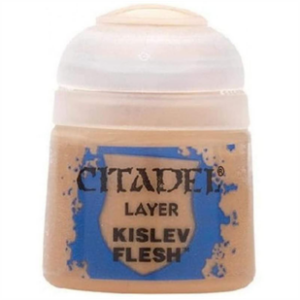
Layer: Kislev Flesh (12ml)
Citadel Layer paints are high quality acrylic paints, and with 70 of them in the Citadel Paint range, you have a huge range of colours and tones to choose from when you paint your miniatures. They are designed to be used straight over Citadel Base paints (and each other) without any mixing. By using several layers you can create a rich, natural finish on your models that looks fantastic on the battlefield. This pot contains 12ml of Kislev Flesh, one of 70 Layer paints in the Citadel Paint range. As with all of our paints, it is a non-toxic, water-based acrylic paint designed for use on plastic, metal, and resin Citadel miniatures.
SKU: GW22-37 -
Spray Primers
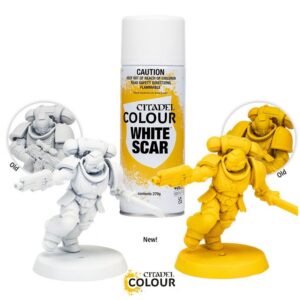
White Scar Spray Paint
White Scar Spray Paint
PRODUCT DESCRIPTION
White Scar Spray is designed for basecoating plastic, resin and metal miniatures. Reformulated for maximum results, with a fantastic white colour.- Can be used as basecoat or undercoat
- 400ml spray can
- Comes with instruction for safe use
SKU: GW62-36


Related products
-
Cyberpunk, SciFi
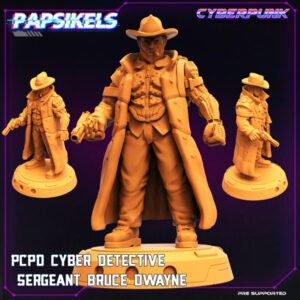
PCPD CYBER DETECTIVE SERGEANT BRUCE DWAYNE
Base not included. Compatible with 28-32mm scale games.
This miniature is printed in high quality resin perfect for painting. Its resistance and high definition make it ideal for miniatures and role-playing games. All our figures are printed with a resolution of 0,04mm 12k printers and have been smoothly washed and cured after printing. Additionally, all supports have been removed, although they may require some additional cleaning before painting, as well as assembly and gluing of certain parts.
This product contains small parts that may cause choking and is not suitable for children under fourteen years of age.
SKU: PAP000016 -
Cyberpunk, SciFi
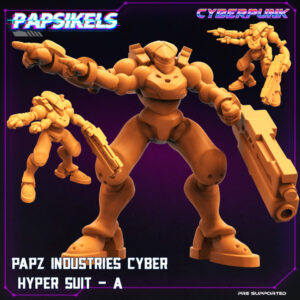
PAPZ INDUSTRIES HYPER CYBER SUIT – A
Base not included. Compatible with 28-32mm scale games.
This miniature is printed in high quality resin perfect for painting. Its resistance and high definition make it ideal for miniatures and role-playing games. All our figures are printed with a resolution of 0,04mm 12k printers and have been smoothly washed and cured after printing. Additionally, all supports have been removed, although they may require some additional cleaning before painting, as well as assembly and gluing of certain parts.
This product contains small parts that may cause choking and is not suitable for children under fourteen years of age.
SKU: PAP000014 -
SciFi
HUMAN LEADER ADVANCE HACKER ORTEGA HANDSOME JOE ALEMAO
Compatible with 28mm scale games. Base not included.
This miniature is printed in high quality resin perfect for painting. Its resistance and high definition make it ideal for miniatures and role-playing games. All our figures are printed with a resolution of 0,04mm 12k printers and have been smoothly washed and cured after printing. Additionally, all supports have been removed, although they may require some additional cleaning before painting, as well as assembly and gluing of certain parts.
This product contains small parts that may cause choking and is not suitable for children under fourteen years of age.
SKU: PAP000003 -
Cyberpunk, SciFi
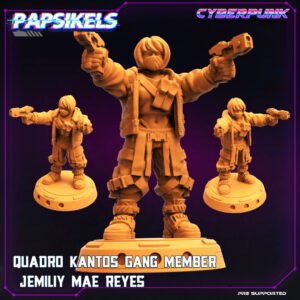
QUADRO KANTOS GANG MEMBER JEMILIY MAE REYES
Base not included. Compatible with 28-32mm scale games.
This miniature is printed in high quality resin perfect for painting. Its resistance and high definition make it ideal for miniatures and role-playing games. All our figures are printed with a resolution of 0,04mm 12k printers and have been smoothly washed and cured after printing. Additionally, all supports have been removed, although they may require some additional cleaning before painting, as well as assembly and gluing of certain parts.
This product contains small parts that may cause choking and is not suitable for children under fourteen years of age.
SKU: PAP000024






There are no reviews yet.