The Discovery of the Dead Arachnicon Hopper: A Witness Account
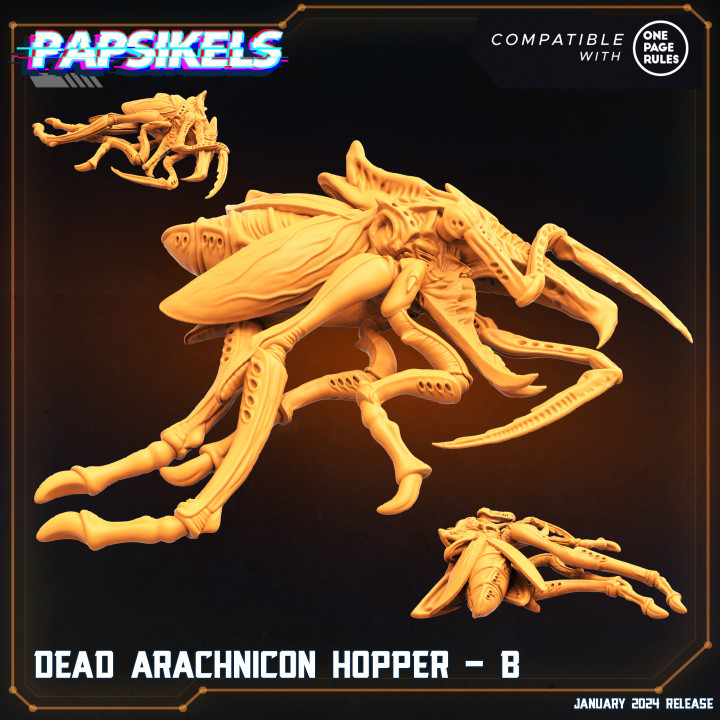
In the vast and ever-evolving universe of tabletop gaming, few creatures hold the same allure and dread as the Arachnicon Hopper. It’s a name that conjures images of terror, precision, and unparalleled craftsmanship. As a devoted member of the resin armies community, I’ve painted, assembled, and battled with countless miniatures, but the discovery of a dead Arachnicon Hopper—a resin miniature unlike any other—was an experience that shook me to my core.
The story begins during one of our bi-monthly tabletop gatherings. Our community, a tight-knit group of miniature enthusiasts, meets regularly to showcase new pieces, swap strategies, and lose ourselves in the epic narratives our resin armies bring to life. On this particular night, however, the air was electric with anticipation. Rumors had spread of a rare, handcrafted Arachnicon Hopper that had been recently acquired by one of our members, known only by his online handle: HopperLord99. The Arachnicon Hopper was legendary in design—a six-legged, biomechanical predator armed with plasma cutters and venomous barbs. Its resin detailing was said to be so intricate that you could almost hear the whirring of its artificial joints as you admired it.
But when HopperLord99 arrived at the venue, something was amiss.
Instead of unveiling the miniature with the usual flair, he walked in with a subdued demeanor, clutching a weathered carrying case. When he finally placed the miniature on the display table, we were stunned. The Arachnicon Hopper lay collapsed in a heap, its once-proud legs twisted unnaturally, its thorax fractured, and its glossy black paint dulled to a matte shadow of its former glory. The creature was dead—not in the narrative sense we often roleplayed, but in the physical reality of resin fragility. For a moment, the room was silent, save for the faint hum of a 3D printer in the corner.
As the group gathered around the fallen masterpiece, the questions came pouring in. What had happened? How could such a resilient piece—crafted from premium resin and painted with evident care—end up in such a state? HopperLord99, visibly shaken, recounted the tale. During a routine skirmish game, the Arachnicon Hopper had been positioned on a precarious terrain piece: a custom 3D-printed battlefield complete with towering spires and crumbling bridges. A stray hand, an unstable ledge, and gravity had conspired against the Hopper. It plummeted to the floor, shattering on impact.
As heartbreaking as it was to see the Arachnicon Hopper in this state, it also sparked a conversation that underscored the strength of our community. Each member shared their own experiences of accidental drops, failed glues, and battle scars earned on the tabletop. It reminded us that behind every intricate piece is a story—not just of creation but of resilience, repair, and reinvention.
The Art of Reviving Fallen Miniatures
The incident with the Arachnicon Hopper became a learning moment for our group. Discussions quickly shifted from mourning the loss to brainstorming ways to salvage and restore the piece. As seasoned miniature hobbyists know, even the most grievous damage can often be reversed with the right tools and techniques.
We began by examining the damage in detail. The Arachnicon Hopper’s legs, made from thin resin rods, had snapped in multiple places. Its thorax had a hairline fracture, and one of its signature plasma cutters was missing a critical piece. Here’s how we approached the restoration:
- Assessing the Damage: The first step was to carefully inspect the miniature for clean breaks and splintered resin. Clean breaks can often be repaired seamlessly, while splintered areas require more intricate work.
- Using High-Quality Adhesives: For the legs, we recommended using a thin, fast-setting cyanoacrylate adhesive. This type of glue creates a strong bond without leaving excess residue, preserving the miniature’s intricate details.
- Gap Filling and Resculpting: The thorax’s fracture required gap-filling techniques. We suggested a two-part epoxy putty, which can be molded and sanded to mimic the original texture of the resin. Once cured, it can be painted over seamlessly.
- Reinforcing Fragile Areas: To prevent future breaks, we drilled small pinholes into the broken leg joints and inserted metal pins for added stability. This technique, known as pinning, is a staple among experienced hobbyists.
- Color Matching and Painting: One of the most challenging aspects of restoration is matching the original paint job. Using high-pigment acrylic paints and an airbrush, we blended colors to recreate the Hopper’s biomechanical sheen.
- Replacing Missing Pieces: The broken plasma cutter presented a unique challenge. Fortunately, the rise of 3D printing has made it easier than ever to replicate lost components. Using a high-resolution 3D printer, we printed a replacement part that matched the original design perfectly.
By the end of the evening, the Arachnicon Hopper was well on its way to recovery. While it might never be quite the same as it was before, its scars became a testament to its resilience and the dedication of the community that rallied to restore it.
The Significance of the Arachnicon Hopper in Resin Miniatures
The Arachnicon Hopper’s fall and revival served as a powerful reminder of why we, as resin armies enthusiasts, are so passionate about our craft. Each miniature is more than just a playing piece; it’s a work of art, a labor of love, and a vessel for storytelling. The Hopper’s intricate design, from the segmented joints to the menacing plasma cutters, showcased the limitless potential of 3D-printed miniatures. Its demise highlighted the importance of proper care, handling, and storage—lessons that every hobbyist, novice or veteran, can take to heart.
Tips for Protecting Your Resin Miniatures
If the Arachnicon Hopper’s story has resonated with you, here are some tips to ensure your own miniatures remain safe and sound:
- Use Protective Storage Cases: Invest in foam-lined carrying cases to transport your miniatures safely. These cases prevent movement and cushion against impact.
- Secure Miniatures During Play: When gaming, use stable terrain pieces and secure your miniatures to the base using adhesive tack or magnets.
- Handle with Care: Always pick up miniatures by their bases rather than delicate parts like limbs or weapons.
- Create a Repair Kit: Keep a miniature repair kit on hand, complete with adhesives, putty, paintbrushes, and a magnifying lens for detailed work.
- Leverage 3D Printing: For those who own a 3D printer, creating replacement parts or reinforcements can be a game-changer when accidents occur.
Why the Arachnicon Hopper Matters
The Arachnicon Hopper’s design isn’t just a testament to the artistry of resin miniatures; it’s a symbol of the creativity and innovation that defines our community. From its fearsome silhouette to its meticulously sculpted details, it represents the pinnacle of what can be achieved through 3D printing technology and artistic skill. Its story—from creation to destruction and eventual revival—is a reflection of the journey many hobbyists undertake. We craft, we battle, we learn, and when setbacks occur, we rebuild.
As I watched HopperLord99 carefully pack the restored Arachnicon Hopper into a new foam-lined case that night, I couldn’t help but feel a renewed appreciation for this hobby and the community that sustains it. Miniatures may be fragile, but the passion behind them is anything but.
For those inspired by this tale, whether you’re a seasoned veteran or a newcomer eager to start your collection, remember: each piece you create tells a story. And with the right tools, patience, and support from the community, even a dead Arachnicon Hopper can rise again.
Resin Armies, your 3D printed miniature store


 CYBER MECHA GRIM POWER
1 × 2,95 €
 Cage - Wood Spikes
1 × 2,95 €
 HUMAN LEADER ADVANCE HACKER ORTEGA HANDSOME JOE ALEMAO
1 × 3,50 €










There are no reviews yet.