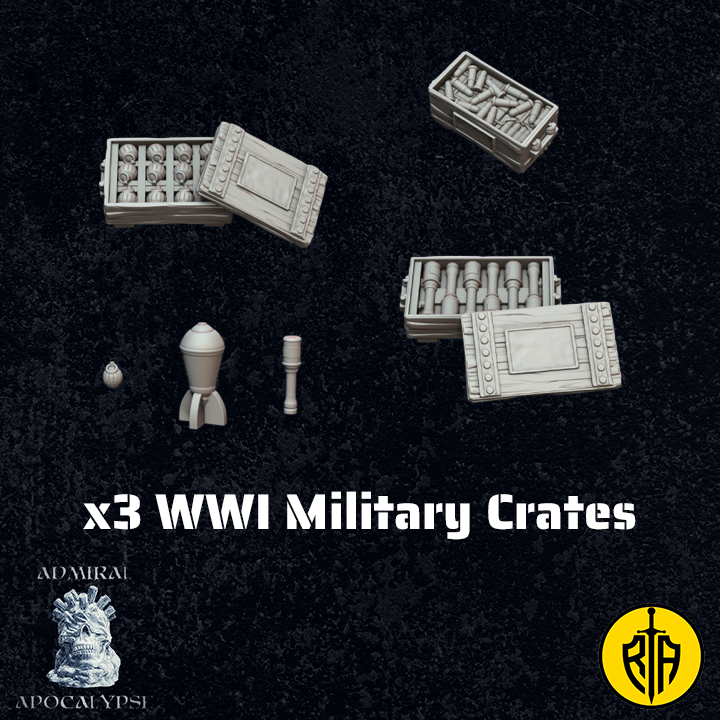
Exploring World War One Military Crates: A Witness’s Perspective in the Resin Armies Community
Introduction: Unearthing History in Miniature Form
As a devoted member of the resin armies community, I’ve spent countless hours exploring the intricate details of history brought to life in miniature form. Among our most captivating projects is the recreation of World War One military crates—a subject that resonates deeply with history enthusiasts and model builders alike. These small yet vital pieces of battlefield logistics carry the stories of an era defined by innovation, struggle, and resilience. Today, I’ll share my experience in discovering, crafting, and optimizing these military crates for display, gameplay, and diorama excellence, offering insights for enthusiasts who want to elevate their modeling journey.
Why World War One Military Crates Matter in Resin Modeling
When most people think of WWI, their minds immediately drift to trenches, tanks, or iconic biplanes. But the humble military crate was equally critical to the war effort, serving as the backbone of supply chains. These crates housed everything from ammunition and medical supplies to rations and communication equipment, ensuring troops could survive and fight in grueling conditions.
For resin modelers, these crates are more than historical artifacts—they’re an opportunity to enhance realism in your builds. Whether you’re working on a standalone scene or a large-scale wargame layout, adding these intricately detailed crates transforms the ordinary into extraordinary. They fill out scenes with authenticity, tell a story about the logistics of war, and offer endless customization opportunities.
My Journey with WWI Military Crates
As someone obsessed with historical accuracy, my first encounter with resin military crates was transformative. Browsing online marketplaces, I stumbled upon beautifully crafted resin bits representing these iconic storage units. Intrigued, I ordered a few sets, eager to incorporate them into a trench diorama I was building for a local competition.
What struck me upon opening the package was the craftsmanship. Each piece bore the marks of aged wood, rusty metal hinges, and even the faint suggestion of wartime stenciling. The quality was staggering, and my excitement grew as I imagined how these small details would elevate my work.
Tips for Crafting and Painting WWI Military Crates
If you’re new to resin modeling or looking to refine your skills, here are some essential tips I’ve picked up from working on WWI military crates:
1. Cleaning and Preparing Resin Bits
Before diving into painting, ensure your resin pieces are properly cleaned. Residual mold-release agents can affect paint adhesion. A quick soak in warm, soapy water, followed by a gentle scrub with an old toothbrush, does the trick.
2. Prime for Success
Resin surfaces are smooth and require a primer for paint to adhere effectively. I recommend using a spray primer designed for resin to avoid clogging fine details. Neutral tones like gray or black work best for military crates.
3. Layering Wood Textures
To replicate the worn look of WWI crates, I use a three-step process:
- Base Coat: Start with a dark brown base to create depth.
- Dry Brushing: Apply lighter shades like tan or sand using a dry brush to highlight wood grain and edges.
- Weathering: Use washes or weathering powders to add grime and simulate the effects of age and battlefield use.
4. Adding Realistic Stencils and Decals
For an authentic touch, add stencils or decals that mimic wartime markings. Common options include “Ammunition,” “Medical Supplies,” or unit-specific codes. These tiny details bring a narrative to your scene, hinting at the crate’s purpose and origin.
5. Contextual Placement
Think about where and how your crates will be displayed. Are they stacked neatly in a supply depot? Scattered haphazardly near an artillery emplacement? Their placement should tell a story, adding depth to your diorama or gaming table.
The Role of 3D Printing in Resin Crates
In recent years, 3D printing has revolutionized the world of resin modeling. As a community member, I’ve watched with fascination as creators push the boundaries of what’s possible, offering endless variations of WWI military crates.
Custom Designs
3D printing allows for unparalleled customization. I’ve seen creators design crates specific to different armies, featuring unique stencils or structural designs reflecting the materials and methods of the time.
Scaling and Detailing
Whether you’re building a 1:72 scale diorama or a 28mm wargaming setup, 3D printing ensures that crates can be scaled precisely to match your needs. Advanced printers can capture even the tiniest details, from splintered wood edges to embossed military insignias.
Durability and Repair
Resin parts can sometimes be brittle, but 3D printing enables quick replacements or enhancements. Need a damaged crate to show battle wear? Print one with a cracked lid or missing slat for added realism.
Building a Narrative with Military Crates
What sets exceptional modelers apart is their ability to tell a story through their work. WWI military crates are perfect for this because they serve as silent witnesses to the chaos of war. Here are a few creative ideas to inspire your next project:
- Supply Line Sabotage: Imagine a scene where enemy troops have intercepted a shipment of crates. Scattered supplies and overturned crates hint at the chaos of the ambush.
- Field Hospital: Position crates near a makeshift medical tent, showing how essential supplies were stored and accessed under fire.
- Trench Life: Use crates as makeshift furniture in a trench, doubling as seats or tables for soldiers.
Engaging the Resin Armies Community
One of the best parts of being in the resin armies community is sharing your work and learning from others. Posting my WWI crate diorama online led to incredible feedback and opened the door to collaborations. Fellow members shared tips on painting techniques, suggested historically accurate details, and even pointed me toward rare reference materials.
If you’re passionate about resin modeling, I encourage you to connect with the community. Whether it’s through forums, social media groups, or local meetups, there’s a wealth of knowledge waiting to be tapped.
Why Resin Armies is Your Go-To Source
For anyone looking to explore WWI military crates, Resin Armies is a treasure trove of inspiration and quality products. Their catalog features a wide range of resin bits designed for historical accuracy and creative potential. The level of detail in their models ensures that every project—whether it’s a battlefield diorama or a wargaming terrain piece—captures the essence of history.
Resin Armies also stands out for their commitment to customer satisfaction, offering tips, tutorials, and personalized recommendations for modelers of all skill levels. If you’re ready to bring history to life in stunning detail, look no further.
Resin Armies, your 3D printed miniature store.


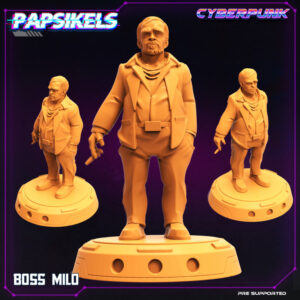 Boss Milo
1 × 2,50 €
Boss Milo
1 × 2,50 € 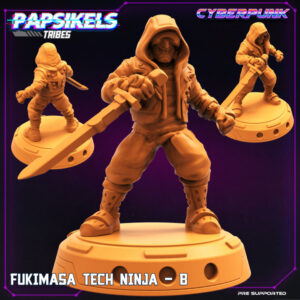 FUKIMASA TECH NINJA - B
1 × 2,50 €
FUKIMASA TECH NINJA - B
1 × 2,50 € 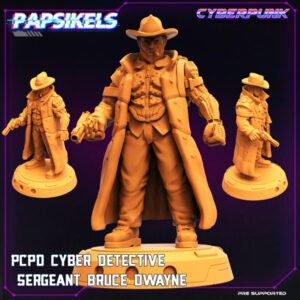 PCPD CYBER DETECTIVE SERGEANT BRUCE DWAYNE
1 × 2,50 €
PCPD CYBER DETECTIVE SERGEANT BRUCE DWAYNE
1 × 2,50 € 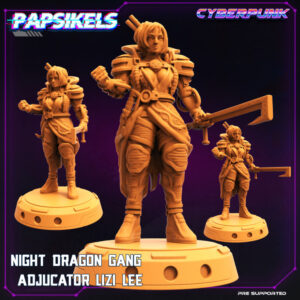 NIGHT DRAGON GANG ADJUCATOR LIZI LEE
2 × 2,50 €
NIGHT DRAGON GANG ADJUCATOR LIZI LEE
2 × 2,50 €  DISHONORED BADBLOOD SKULLHUNTER MASTAB
1 × 3,95 €
DISHONORED BADBLOOD SKULLHUNTER MASTAB
1 × 3,95 € 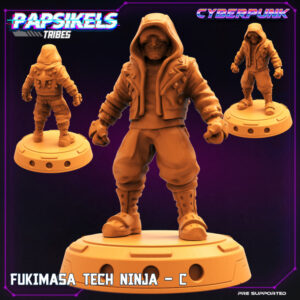 FUKIMASA TECH NINJA - C
1 × 2,50 €
FUKIMASA TECH NINJA - C
1 × 2,50 € 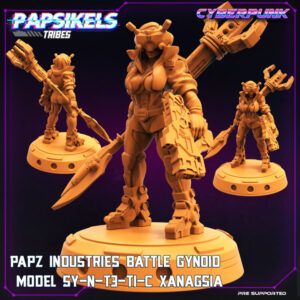 PAPZ INDUSTRIES BATTLE GYNOID MODEL SY_N_T3_T1_C XANAGSIA
1 × 2,50 €
PAPZ INDUSTRIES BATTLE GYNOID MODEL SY_N_T3_T1_C XANAGSIA
1 × 2,50 € 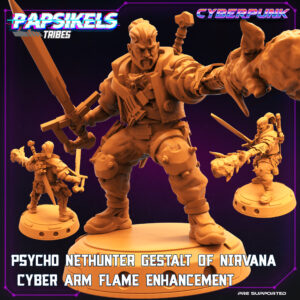 PSYCHO NETHUNTER GESTALT OF NIRVANA FLAME ARM CYBER ENHANCEMENT
2 × 2,50 €
PSYCHO NETHUNTER GESTALT OF NIRVANA FLAME ARM CYBER ENHANCEMENT
2 × 2,50 € 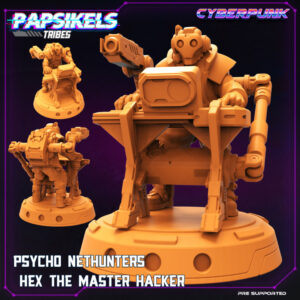 PSYCHO NETHUNTERS HEX THE MASTER HACKER
1 × 3,50 €
PSYCHO NETHUNTERS HEX THE MASTER HACKER
1 × 3,50 € 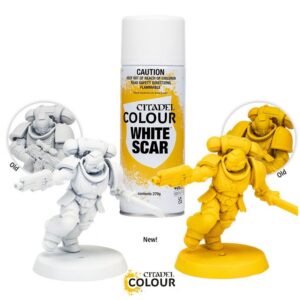 White Scar Spray Paint
1 × 16,00 €
White Scar Spray Paint
1 × 16,00 €  Crates Pile
1 × 3,95 €
Crates Pile
1 × 3,95 €  Desert item bundle Crates & Barrels
1 × 15,99 €
Desert item bundle Crates & Barrels
1 × 15,99 €  Premium Holder Medical Attention
1 × 4,50 €
Premium Holder Medical Attention
1 × 4,50 € 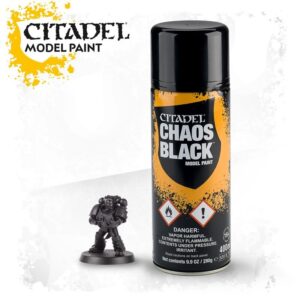 Chaos Black Spray Paint
1 × 13,85 €
Chaos Black Spray Paint
1 × 13,85 €  Citadel Colour Painting Handle XL
1 × 11,90 €
Citadel Colour Painting Handle XL
1 × 11,90 €